LeetCode-in-Java


3977. Minimum Time to Reach Target With Limited Power
Hard
You are given a directed weighted graph with n nodes labeled from 0 to n - 1.
The graph is represented by a 2D integer array edges, where edges[i] = [ui, vi, ti] indicates a directed edge from node ui to node vi that takes ti seconds to traverse.
You are also given an integer power representing the initial available power, and an integer array cost of length n, where cost[u] represents the power required to forward the signal from node u through any one of its outgoing edges.
You are given two integers source and target.
The signal starts at source at time 0 with power units of power and follows these rules:
- The signal may traverse a directed edge from node
uonly if the remaining power is at leastcost[u]. - No power is consumed when the signal arrives at a node, unless it later leaves that node by traversing another edge.
- When the signal is forwarded from node
u, the remaining power is decreased bycost[u]units. - Traversing an edge
edges[i] = [ui, vi, ti]increases the total time bytiseconds.
Return an integer array answer of size 2, where:
answer[0]is the minimum time required for the signal to reach nodetarget.answer[1]is the maximum remaining power among all paths that achieveanswer[0].
If the signal cannot reach target, return [-1, -1].
Example 1:
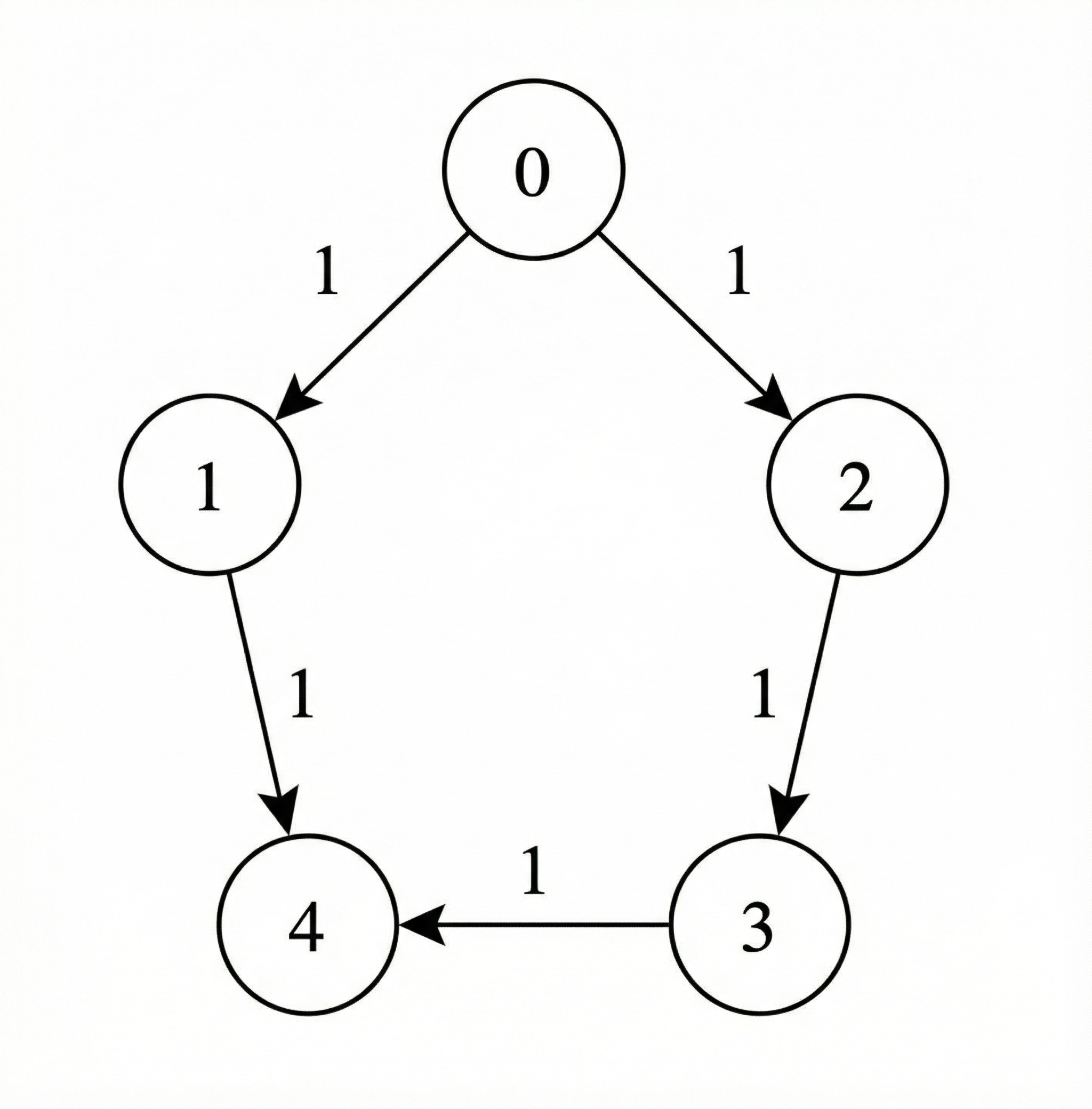
Input: n = 5, edges = [[0,1,1],[1,4,1],[0,2,1],[2,3,1],[3,4,1]], power = 4, cost = [2,3,1,1,1], source = 0, target = 4
Output: [3,0]
Explanation:
- The signal starts at node 0 with 4 units of power.
- The path
0 -> 1 -> 4is not valid, because after leaving node 0, the signal has 2 units of power remaining, which is less thancost[1] = 3. - The valid path
0 -> 2 -> 3 -> 4takes a total time of 3. - The total power consumed along this path is
cost[0] + cost[2] + cost[3] = 4, leaving 0 remaining power. - Hence, the answer is
[3, 0].
Example 2:
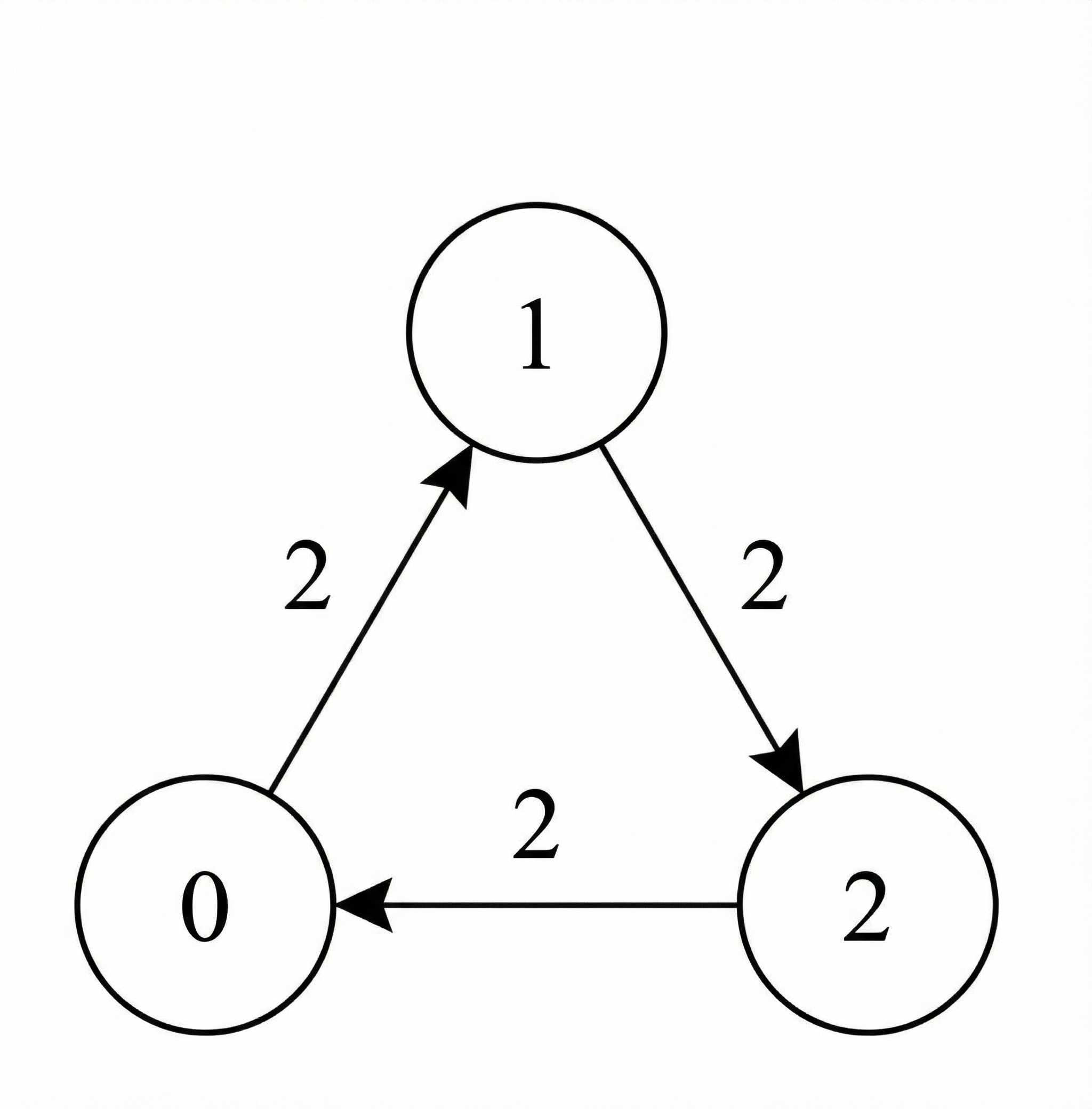
Input: n = 3, edges = [[0,1,2],[1,2,2],[2,0,2]], power = 3, cost = [1,1,1], source = 1, target = 1
Output: [0,3]
Explanation:
- Since the
sourceandtargetare the same node, no traversal is required. - Hence, the minimum total time taken is 0, and no power is consumed.
- Therefore, the answer is
[0, 3].
Example 3:
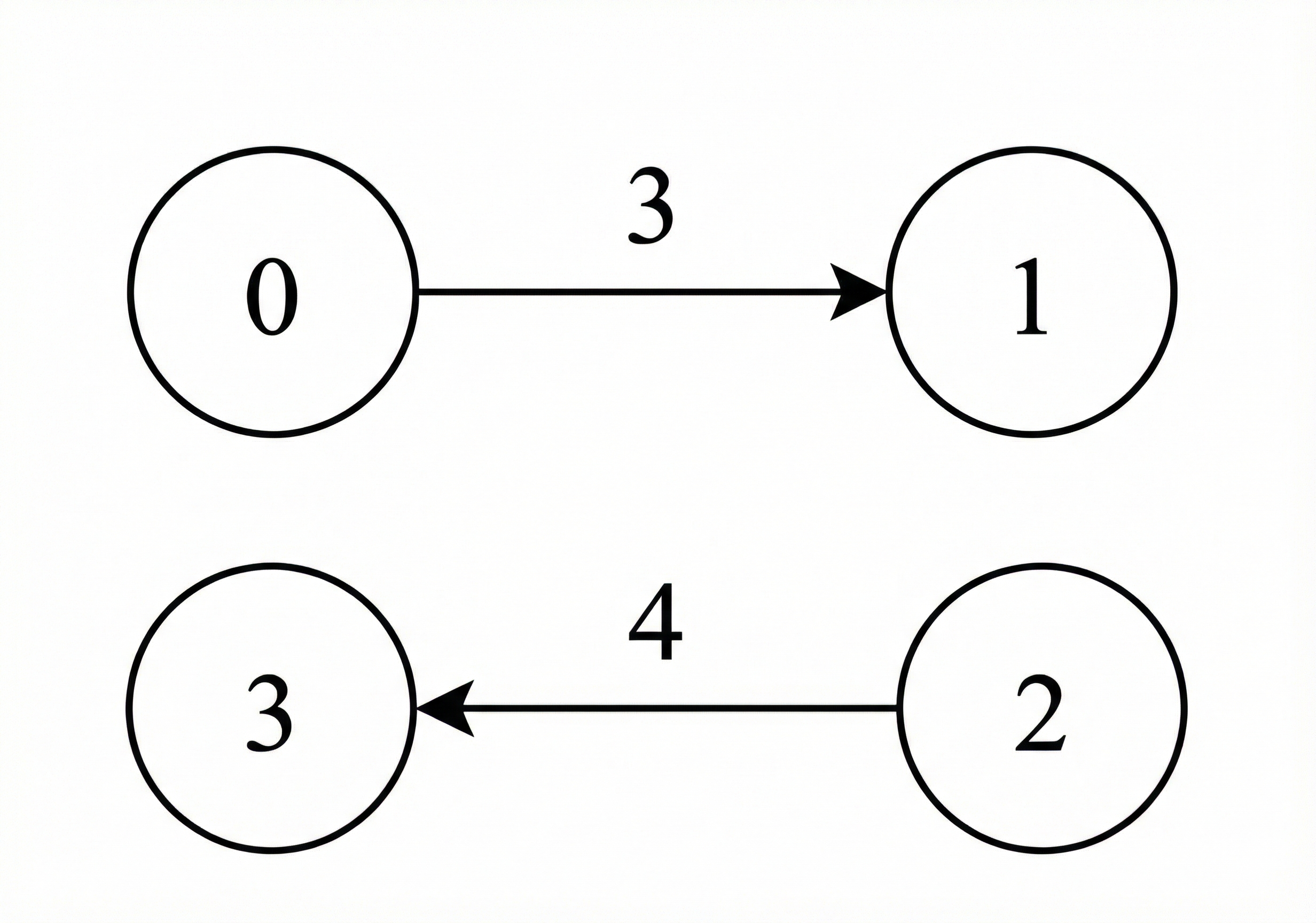
Input: n = 4, edges = [[0,1,3],[2,3,4]], power = 3, cost = [1,1,1,1], source = 0, target = 3
Output: [-1,-1]
Explanation:
There is no valid path from source to target, therefore return [-1, -1].
Constraints:
1 <= n <= 10000 <= edges.length <= 1000edges[i] = [ui, vi, ti]0 <= ui, vi <= n - 11 <= ti <= 1091 <= power <= 1000cost.length == n1 <= cost[i] <= 20000 <= source, target <= n - 1
Solution
import java.util.Arrays;

public class Solution {
    private static class Graph {
        int[] head;
        int[] next;
        int[] to;
        int[] time;

        Graph(int n, int[][] edges) {
            int m = edges.length;
            head = new int[n];
            next = new int[m + 1];
            to = new int[m + 1];
            time = new int[m + 1];
            for (int i = 0; i < m; i++) {
                int u = edges[i][0];
                to[i + 1] = edges[i][1];
                time[i + 1] = edges[i][2];
                next[i + 1] = head[u];
                head[u] = i + 1;
            }
        }
    }

    private static class MinHeap {
        long[] heap = new long[2048];
        int size;

        void push(long value) {
            if (++size == heap.length) {
                heap = Arrays.copyOf(heap, heap.length << 1);
            }
            int j = size;
            while (j > 1) {
                int p = j >>> 1;
                if (heap[p] <= value) {
                    break;
                }
                heap[j] = heap[p];
                j = p;
            }
            heap[j] = value;
        }

        long pop() {
            long result = heap[1];
            long val = heap[size--];
            int i = 1;
            while ((i << 1) <= size) {
                int left = i << 1;
                int right = left + 1;
                int min = right <= size && heap[right] < heap[left] ? right : left;
                if (val <= heap[min]) {
                    break;
                }
                heap[i] = heap[min];
                i = min;
            }
            if (size > 0) {
                heap[i] = val;
            }
            return result;
        }

        boolean isEmpty() {
            return size == 0;
        }
    }

    public long[] minTimeMaxPower(
            int n, int[][] edges, int power, int[] cost, int source, int target) {
        Graph graph = new Graph(n, edges);
        int[] bestPower = new int[n];
        Arrays.fill(bestPower, -1);
        MinHeap pq = new MinHeap();
        long startPowerComp = 1024L - power;
        pq.push((startPowerComp << 11) | source);
        while (!pq.isEmpty()) {
            long curr = pq.pop();
            long currTime = curr >>> 22;
            int currPower = 1024 - (int) ((curr >>> 11) & 0x7FF);
            int u = (int) (curr & 0x7FF);
            if (u == target) {
                return new long[] {currTime, currPower};
            }
            if (currPower > bestPower[u]) {
                bestPower[u] = currPower;
                if (currPower >= cost[u]) {
                    addNeighbors(pq, currTime, currPower, u, graph, cost);
                }
            }
        }
        return new long[] {-1, -1};
    }

    private void addNeighbors(
            MinHeap pq, long currTime, int currPower, int u, Graph graph, int[] cost) {
        int nextPower = currPower - cost[u];
        long nextPowerComp = 1024L - nextPower;
        for (int e = graph.head[u]; e != 0; e = graph.next[e]) {
            long nextPacked =
                    ((currTime + graph.time[e]) << 22) | (nextPowerComp << 11) | graph.to[e];
            pq.push(nextPacked);
        }
    }
}